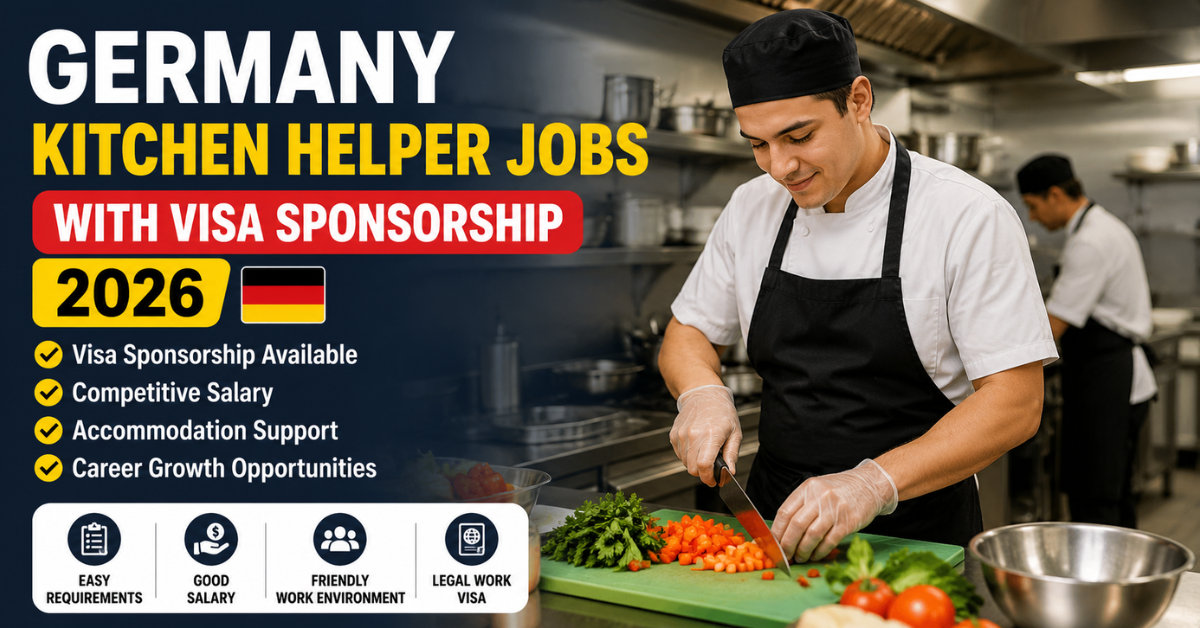
Germany Kitchen Helper Jobs with Visa Sponsorship 2026
Germany continues to attract international workers due to its strong economy, modern workplaces, and growing demand for support staff in the hospitality sector. In 2026, Germany Kitchen Helper Jobs with Visa Sponsorship are becoming a popular opportunity for foreign workers who want stable employment, competitive salaries, and the chance to build a future in Europe. Many hotels, restaurants, catering companies, and food production businesses are actively hiring kitchen assistants because of labor shortages in the hospitality industry.
For job seekers looking for unskilled or entry level work abroad, kitchen helper positions can be a practical pathway into the German job market. These roles often require basic skills, willingness to learn, teamwork, and physical stamina rather than advanced qualifications. Some employers also provide visa sponsorship, accommodation assistance, meals during shifts & training programs for new employees.
This article explains everything you need to know about Germany Kitchen Helper Jobs with Visa Sponsorship 2026, including job duties, salary expectations, eligibility requirements, benefits, application methods, and useful tips for increasing your chances of getting hired.
Overview of Germany Kitchen Helper Jobs 2026
Germany’s hospitality and food service industry is expanding rapidly. Tourism, international business travel, and the increasing number of restaurants and hotels have created a continuous demand for support workers. Kitchen helper jobs are essential because they help maintain cleanliness, prepare ingredients, organize kitchen supplies & assist chefs during busy working hours.
Foreign workers are especially welcomed in areas where local labor shortages exist. In 2026, many German employers are expected to continue hiring international candidates through legal work visa programs. This provides a valuable opportunity for people seeking overseas employment with stable working conditions.
Kitchen helper jobs are generally considered entry level positions, making them suitable for individuals without advanced education or extensive professional experience. Employers usually focus more on reliability, discipline, teamwork and willingness to work flexible shifts.
Many companies also provide training to help workers adapt to German workplace standards and food safety regulations. This can make it easier for foreign workers to settle into their new environment while developing useful hospitality skills.
Why Germany Needs Kitchen Helpers
Germany has one of the largest hospitality sectors in Europe. Hotels, restaurants, cafes, hospitals, and catering businesses depend heavily on support staff to maintain efficient kitchen operations. However, demographic changes and labor shortages have made it difficult for employers to fill all available positions locally.
Several factors contribute to the growing demand for kitchen helpers in Germany:
Growing Tourism Industry
Germany remains one of Europe’s most visited countries. Millions of tourists visit cities such as Berlin, Munich, Hamburg, and Frankfurt every year. This increases the demand for restaurants, hotels & catering services.
Labor Shortages
Many hospitality businesses struggle to recruit enough workers for physically demanding kitchen jobs. As a result, employers increasingly seek international applicants.
Expansion of Food Delivery Services
Food delivery platforms and cloud kitchens are expanding rapidly. This creates additional demand for kitchen support staff & food preparation assistants.
Aging Workforce
Germany’s aging population means fewer younger workers are entering the hospitality industry, leading businesses to recruit foreign employees.
Main Duties and Responsibilities
Kitchen helpers play an important role in supporting chefs and kitchen teams. Their work ensures that kitchens remain clean, organized and efficient during busy service hours.
Cleaning and Sanitizing
One of the primary responsibilities is cleaning kitchen equipment, utensils, dishes, and workstations. Maintaining hygiene is essential in the food industry.
Food Preparation Support
Kitchen helpers often assist chefs by washing vegetables, cutting ingredients, preparing sauces, and organizing food supplies.
Dishwashing Duties
Large restaurants and hotels handle thousands of dishes daily. Kitchen assistants help manage dishwashing operations efficiently.
Organizing Inventory
Workers may assist in storing food items properly and checking stock levels to ensure ingredients are available when needed.
Waste Disposal
Kitchen helpers are responsible for disposing of waste safely while following hygiene standards.
Supporting Kitchen Staff
During busy hours, kitchen assistants help chefs and cooks complete tasks quickly & maintain smooth workflow.
Salary Expectations in Germany
Salary levels for kitchen helper jobs in Germany vary depending on the employer, city, experience level, and working hours. In major cities with higher living costs, wages may be slightly higher.
Average Monthly Salary
Most kitchen helpers earn between €1,800 and €2,500 per month before taxes. Some workers may earn additional overtime payments, bonuses, or night-shift allowances.
Hourly Wages
Hourly wages typically range from €12 to €16 depending on the workplace and region.
Additional Benefits
Some employers may provide:
- Free meals during shifts
- Shared accommodation
- Transportation support
- Paid annual leave
- Health insurance contributions
- Overtime pay
Benefits of Visa Sponsorship Jobs
Visa sponsorship opportunities are highly valuable for international workers because they simplify the legal employment process in Germany.
Legal Work Authorization
Sponsored workers receive proper legal permission to work in Germany according to immigration regulations.
Stable Employment Opportunities
Many sponsored jobs come with formal employment contracts, offering greater job security.
Career Growth Potential
Kitchen helper roles can lead to promotions into cooking, food preparation or restaurant management positions over time.
International Work Experience
Working in Germany helps employees gain valuable international hospitality experience.
Access to European Lifestyle
Employees can experience Germany’s culture, public transportation, healthcare system and high workplace standards.
Opportunity to Learn German
Many workers improve their language skills while living and working in Germany, increasing future job opportunities.
Requirements for Kitchen Helper Jobs in Germany
Although these jobs are considered entry-level, employers still expect candidates to meet certain requirements.
Basic Education
Most employers prefer applicants with at least a secondary school education.
Physical Fitness
Kitchen work can involve long hours of standing, lifting supplies, and fast-paced activity.
Teamwork Skills
Kitchen environments require strong cooperation between staff members.
Basic English or German Language Skills
Knowing basic English is often helpful, while basic German language skills can improve hiring chances.
Hygiene Awareness
Employers value workers who understand cleanliness and food safety practices.
Flexible Availability
Candidates may need to work weekends, holidays or evening shifts.
Types of Employers Hiring Kitchen Helpers
Several industries and organizations in Germany recruit kitchen assistants regularly.
Hotels
Luxury and business hotels require kitchen support staff to manage restaurants and catering operations.
Restaurants
Restaurants of all sizes frequently hire kitchen helpers to support chefs and maintain kitchen cleanliness.
Cafes and Bakeries
Smaller food businesses often recruit assistants for food preparation and cleaning duties.
Hospitals and Care Homes
Healthcare facilities need kitchen staff to help prepare meals for patients & residents.
Catering Companies
Event catering businesses hire kitchen helpers for weddings, conferences and large gatherings.
Food Production Companies
Factories producing packaged food products also employ kitchen support workers.
Work Environment and Daily Routine
Kitchen helper jobs are active and fast-paced. Workers usually spend most of their shift moving between preparation areas, dishwashing stations, storage rooms and cleaning areas.
A typical workday may include:
- Preparing ingredients before opening hours
- Cleaning utensils and equipment
- Assisting chefs during meal service
- Organizing inventory deliveries
- Sanitizing kitchen surfaces at closing time
Shifts may vary depending on the employer. Restaurants and hotels often require evening and weekend work, especially during tourist seasons.
How to Apply for Kitchen Helper Jobs in Germany
Finding legitimate kitchen helper jobs with visa sponsorship requires careful research and professional applications.
Prepare a Professional CV
Create a simple and clear resume highlighting your work experience, skills, education & language abilities.
Search Trusted Job Portals
Use reliable international job websites and company career pages that advertise verified vacancies.
Write a Strong Cover Letter
Explain your interest in working in Germany and your willingness to learn & adapt.
Apply to Multiple Employers
Submitting applications to several employers increases your chances of receiving interview invitations.
Attend Online Interviews
Many companies conduct interviews through video calls for international applicants.
Receive Job Offer
If selected, the employer may provide documents needed for visa sponsorship.
Apply for Work Visa
Use the employment contract and sponsorship documents to apply for a German work visa.
Documents Required for Visa Sponsorship
Applicants usually need the following documents during the hiring & visa process:
- Valid passport
- Updated CV or resume
- Educational certificates
- Work experience letters if available
- Passport size photographs
- Employment contract
- Visa application forms
- Language certificates if required
Some employers may request additional documentation depending on the job role & immigration rules.
Tips to Improve Your Hiring Chances
Competition for overseas jobs can be strong, so improving your application quality is important.
Learn Basic German
Even beginner level German language skills can make your application more attractive.
Highlight Relevant Experience
Any hospitality, restaurant, cleaning, or kitchen related experience should be included on your CV.
Apply Early
Many employers recruit months before the start date especially for seasonal hiring periods.
Keep Documents Organized
Ensure your passport, certificates, and resume are updated and professional.
Focus on Trusted Employers
Avoid suspicious offers that promise unrealistic salaries or guaranteed visas.
Improve Communication Skills
Professional communication during interviews can create a positive impression.
Common Mistakes Applicants Should Avoid
Many international job seekers make avoidable errors during the application process.
Applying Without Research
Always verify that the company and job offer are legitimate before sharing documents.
Using Poorly Written Resumes
A messy or incomplete CV may reduce your chances of getting shortlisted.
Ignoring Language Preparation
Basic communication skills can significantly improve workplace integration.
Falling for Fraudulent Offers
Be cautious of recruiters requesting large upfront payments or making unrealistic promises.
Missing Deadlines
Late document submissions can delay visa processing or result in rejection.
FAQs
Are kitchen helper jobs in Germany available for foreigners?
Yes, many employers hire international workers due to labor shortages in the hospitality sector.
Do I need experience for a kitchen helper job?
Not always. Some employers provide training for beginners, although previous hospitality experience can help.
Can employers provide accommodation?
Some companies offer shared accommodation or housing assistance, but benefits vary by employer.
Is German language knowledge mandatory?
Basic German is helpful but not always mandatory. Some workplaces use English speaking staff.
What is the average salary for kitchen helpers in Germany?
Most workers earn between €1,800 & €2,500 monthly depending on the employer and location.
Expert Advice for International Applicants
Building a successful career abroad requires patience, preparation and realistic expectations. Kitchen helper jobs may appear simple, but they provide valuable opportunities to enter the European hospitality industry.
Workers who show discipline, reliability and strong teamwork often receive promotions and long term employment opportunities. Many successful hospitality professionals started in entry level kitchen support positions before moving into higher-paying roles.
Applicants should focus on legal and transparent hiring channels, prepare professional applications, and remain open to learning new workplace standards & cultural practices.
Conclusion
Germany Kitchen Helper Jobs with Visa Sponsorship 2026 offer practical opportunities for international workers seeking stable employment in Europe. The hospitality industry continues to grow, creating demand for reliable kitchen assistants in hotels, restaurants, catering companies, & healthcare facilities.
These positions are especially attractive because they often require limited experience while offering competitive salaries, legal employment opportunities and valuable international exposure. Workers can gain hospitality experience, improve language skills and potentially build long-term careers in Germany’s food service industry.
Job seekers should focus on professional applications, realistic expectations, and verified employers to maximize their chances of success. With proper preparation and dedication, kitchen helper jobs can become an important first step toward a rewarding international career.
Disclaimer
The information provided in this article is for educational and informational purposes only. Job availability, visa sponsorship policies, salaries and hiring requirements may change over time depending on employers and German immigration regulations. Readers are encouraged to verify all details directly through official company websites and authorized government sources before applying. We do not guarantee employment, visa approval or recruitment outcomes.